.png)
Does my dog need clothes: which dogs and in what weather
In short: not every dog needs clothes. They genuinely help small and short-haired dogs, dogs without an undercoat, puppies, senior and weakened dogs — in cold, wind and rain. Dogs with a thick double coat (husky, malamute, samoyed) usually do not need warm clothes and can overheat in them.
Which dogs need clothes most
| Dogs | Why they get cold | Examples |
|---|---|---|
| Small breeds | A small body loses heat faster and the belly is close to cold ground and snow | chihuahua, toy terrier, miniature pinscher |
| Short-haired, no undercoat | The coat holds almost no heat | french bulldog, yorkshire terrier, chinese crested |
| Lean, sighthound build | Very little body fat | italian greyhound, whippet, greyhounds |
| Puppies and senior dogs | They regulate body temperature less well | any breed |
| After illness or surgery | A weakened body — ask your vet | any breed |
Which dogs usually do not need clothes
Dogs with a thick double coat — huskies, malamutes, samoyeds, shepherds — tolerate cold well and a warm jumpsuit can make them overheat. For these dogs clothes make sense mainly in slush, to keep the coat dry and clean.
What to wear in which weather
| Weather | What works |
|---|---|
| Cool and windy | a light hoodie, turtleneck or vest |
| Rain and slush | an anorak or raincoat — the coat and belly stay dry and clean |
| Around 0 °C (32 °F) and below | a warm jacket or jumpsuit |
| Frost and snow | a jumpsuit that covers the chest and belly from snow and wind |
This is a guideline, not a rule: take the breed, the age, how your dog feels and the length of the walk into account.
How to tell your dog is cold
• shivering;
• lifting paws, stopping, refusing to walk on;
• hunching the back and tucking the tail;
• pulling towards home and cutting the walk short;
• cold ears and paws.
How to choose clothes that do not get in the way
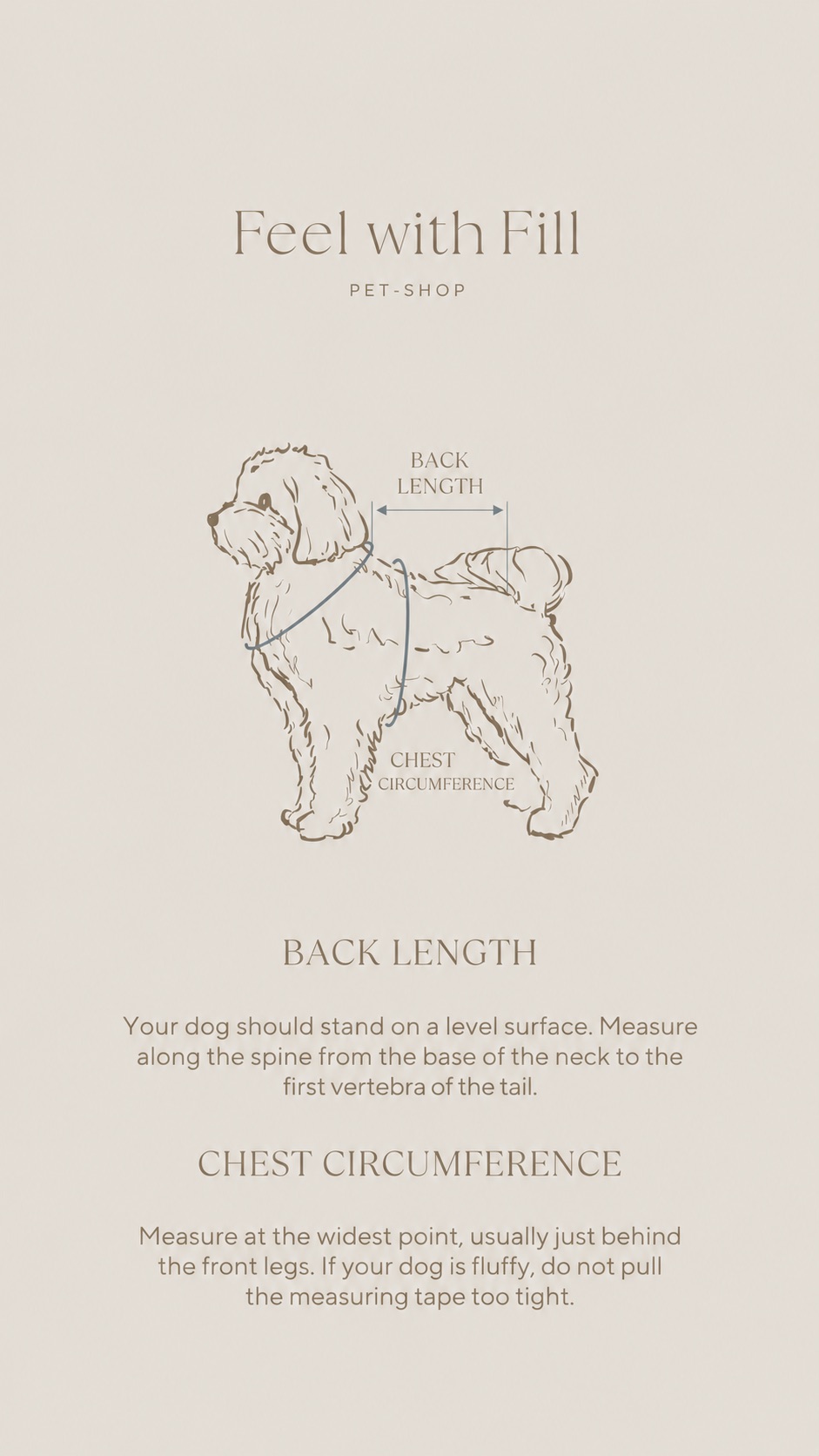
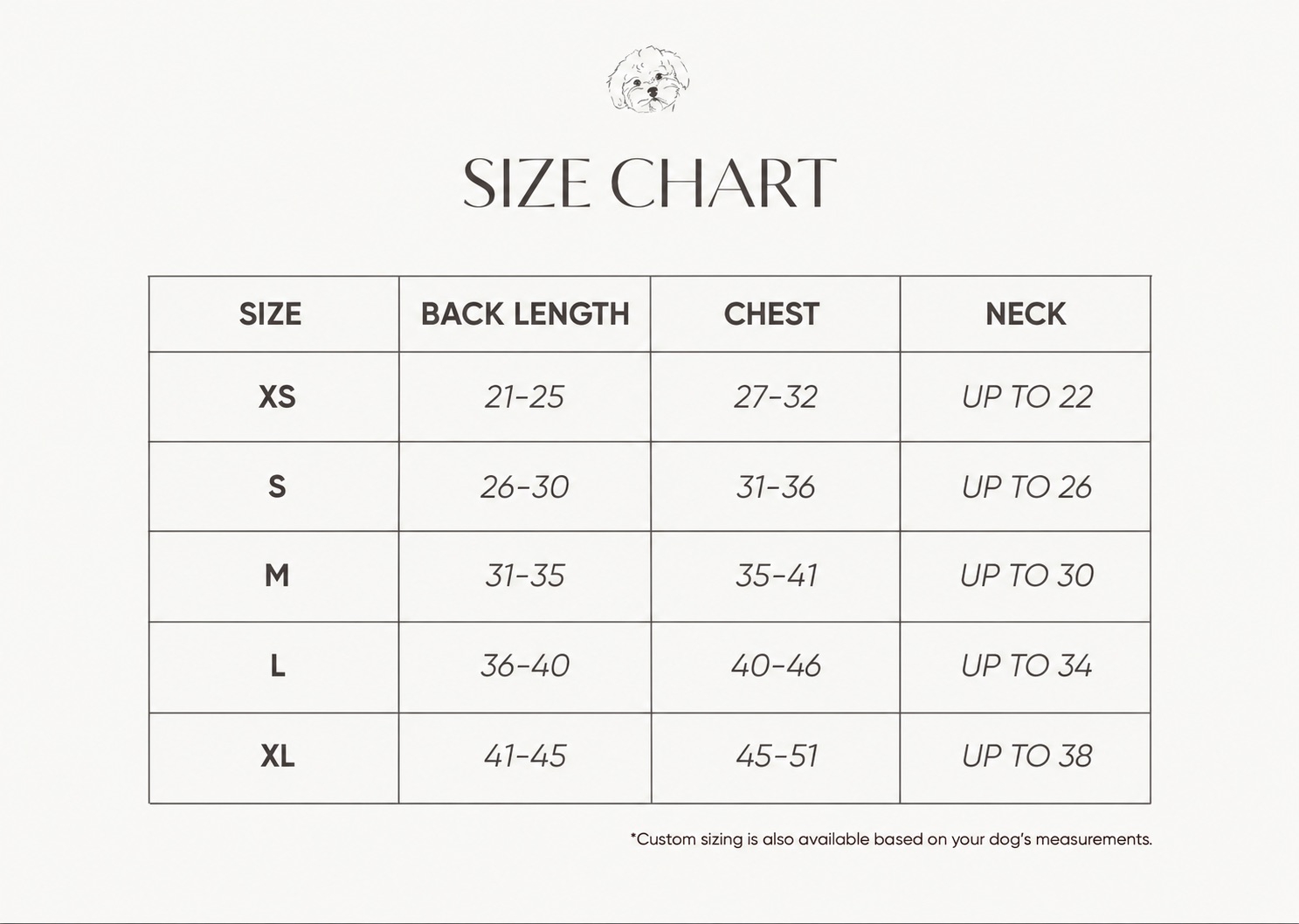
• Size by chest girth — see the size guide.
• The piece must not press under the front legs, rub or restrict movement.
• Fabric by season: knitwear and fleece for warmth, water-repellent materials for rain.
• Take the clothes off indoors so the dog does not overheat.
• Unusual build? Any Feel with Fill model can be made to your dog’s measurements.
From what temperature should I dress my dog?
There is no single number. Small and short-haired dogs may need a layer already in cool windy weather, most other dogs in frost or slush, and northern breeds with a dense undercoat usually not at all.
Are clothes bad for a dog?
Well-chosen clothes are not. What harms is a piece that is too tight, wrong for the season, or worn indoors where the dog overheats.
Can my dog stay dressed at home or overnight?
Better not: indoors a dog can overheat, and the coat and skin need to breathe.
Do big dogs need clothes?
Big dogs with a thick coat usually do not. Large short-haired dogs (a doberman or a boxer, for example) may need a warm layer in frost and a raincoat in slush.
What if my dog hates clothes?
Introduce them gradually: put the piece on at home for a few minutes, praise, give a treat, and increase the time step by step.
If your dog has health issues, ask your vet about cold-season care. What exactly to choose for autumn: dog clothes for autumn.